Why Clipboard Image Paste Behaves Differently in Chrome, Firefox, and Safari
Paste works fine in Chrome, then a coworker on Safari says the button does nothing, and someone on Firefox says it asked for a permission they had never seen before. This is not a bug in any one tool. Clipboard image access runs through the Async Clipboard API, and Chrome, Firefox, and Safari have not converged on identical behavior for it, even though every image-pasting site (including this one) has to work around the gaps. Here is what actually differs, based on how each browser's documented clipboard permission model works and a live test run in Chrome 151.
The Two Ways a Page Can Read an Image From Your Clipboard
There are two separate code paths, and browsers support them unevenly:
- The paste event. When you press Ctrl+V or Cmd+V while a page element has focus, the browser fires a
pasteevent with aclipboardDataobject. A script can read image items directly out of that event without asking for any special permission, because it only fires in response to a real user keystroke. - navigator.clipboard.read(). This lets a script read the clipboard on demand, for example when you click an "Access Clipboard" button instead of pressing Ctrl+V. It requires the Async Clipboard API, a secure context (HTTPS), and, in most browsers, an explicit permission grant.
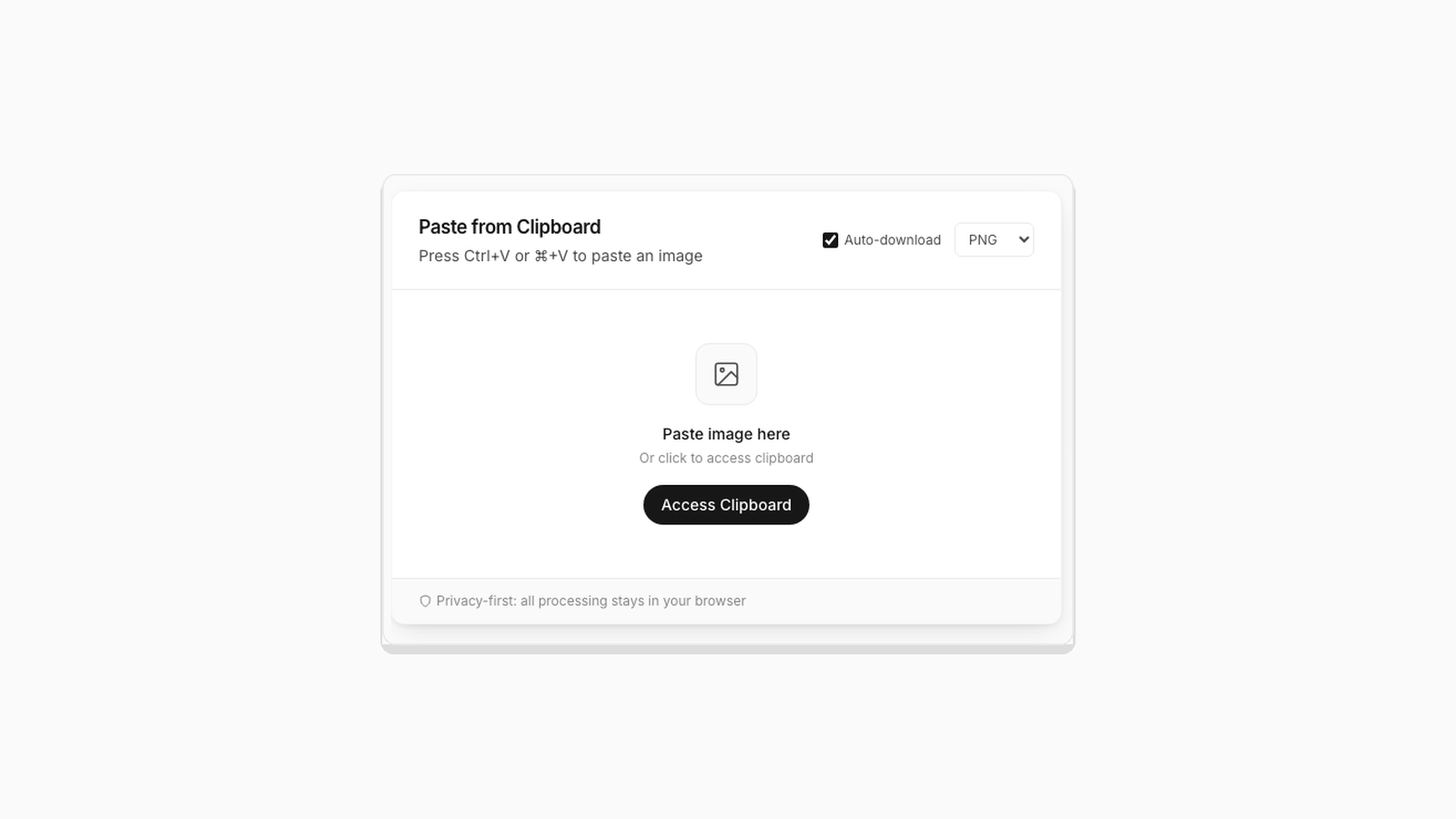
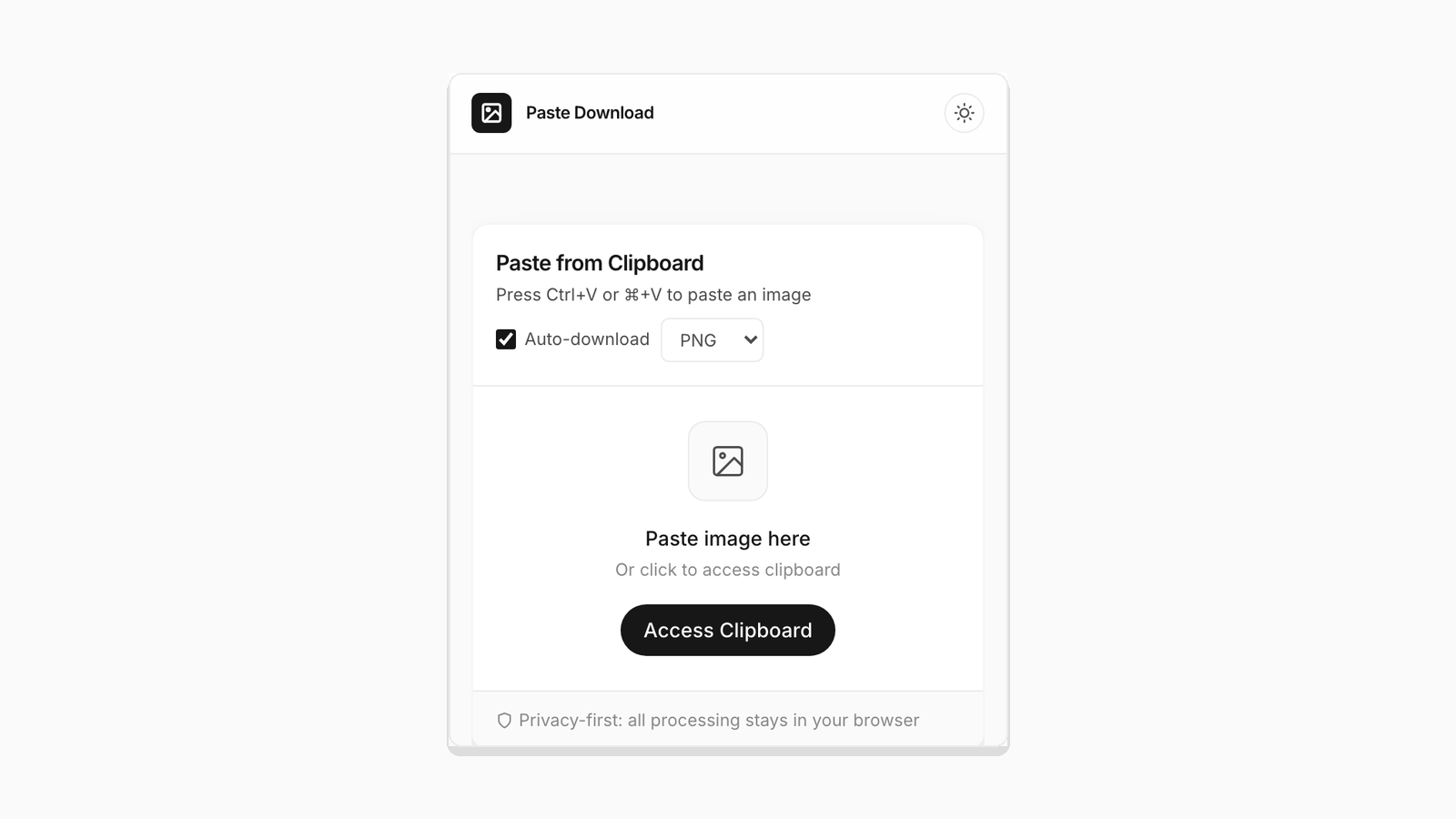
PasteDownloadApp uses both: the paste event for the Ctrl+V flow, and navigator.clipboard.read() for the Access Clipboard button. That combination is also why the button sometimes behaves differently than the keyboard shortcut on the same page. If the button specifically is the one failing for you, see why "Access Clipboard" fails and how to fix it.
Chrome and Edge (Chromium)
Chromium browsers have the most complete implementation. The paste event has worked for image data for years, and navigator.clipboard.read() with ClipboardItem support for images has been stable since Chrome shipped the Async Clipboard API's image support. I tested this article's tool directly in Chrome 151.0.7922.172 on macOS 26.4: pasting a 1.15 MB PNG, converting it, and downloading the result all completed without any permission prompt at all when triggered by a real paste keystroke. The permission prompt only appears for the button-triggered read() path, and Chrome remembers the grant for the session.
Firefox
Firefox supports the paste event the same way Chromium does, so Ctrl+V works reliably. Where it differs is navigator.clipboard.read(): Firefox has historically been more conservative about exposing arbitrary clipboard reads to scripts, and older releases required enabling the feature manually through about:config before read() would work for image data at all. Even on current releases where it works unflagged, Firefox is stricter about requiring the call to happen inside a direct response to a user click, a rejected or unfocused window will fail silently rather than showing a prompt. If a click-to-paste button does not respond in Firefox, pressing Ctrl+V directly into the drop zone is the more reliable path.
Safari
Safari supports the Async Clipboard API but applies the strictest gesture requirements of the three. A call to navigator.clipboard.read() has to happen synchronously inside a user-initiated event handler; if there is any delay, such as an await before the call or a state update in between, Safari will reject the request instead of showing a permission dialog. This is a deliberate anti-abuse measure, not a bug, but it means code that works in Chrome without changes can silently fail in Safari. The paste event path is unaffected by this restriction, since it is inherently tied to a real keystroke, which is another reason Ctrl+V is the more dependable method across all three browsers.
What This Means in Practice
| Browser | Ctrl+V / Cmd+V paste event | Click-to-paste (clipboard.read) |
|---|---|---|
| Chrome / Edge | Reliable | Reliable, one-time permission prompt |
| Firefox | Reliable | Works on current releases, older versions need a flag enabled |
| Safari | Reliable | Fails if not called synchronously inside the click handler |
The practical takeaway across every browser is the same: Ctrl+V or Cmd+V is the most consistent way to get an image out of your clipboard and into a browser tool. Buttons like "Access Clipboard" are a convenience for when you cannot use the keyboard shortcut, not the primary path.
Frequently Asked Questions
Does PasteDownloadApp work in Safari?
Yes. Paste with Cmd+V and it works the same as Chrome. The Access Clipboard button is less reliable in Safari because of its stricter gesture rules, so the keyboard shortcut is the better option there.
Why does Firefox ask a different permission question than Chrome?
The two browsers use different underlying permission models for the Async Clipboard API. Firefox has historically treated arbitrary clipboard reads as more sensitive than Chrome does, which shows up as stricter prompts or a feature flag on older versions.
Is drag and drop affected by these differences?
No. Drag and drop uses the DataTransfer interface, which is a separate, older API with consistent support across Chrome, Firefox, and Safari. If clipboard paste is giving you trouble, dragging a file into the drop zone is a reliable fallback.
Related Guides
 Why "Access Clipboard" Fails, and How to Fix It Clipboard read permission errors explained: browser support, HTTPS requirements, and permission prompts.
  Saving a Clipboard Image on Android vs iPhone: What Actually Works Mobile clipboard access does not match desktop. Here is the real difference between Android and iOS browsers.
  5 Faster Ways to Save Clipboard Images Without Software Compare browser-based and built-in methods for saving copied images on desktop and mobile.
 Try pastedownloadapp.com in your own browser. Press Ctrl+V or Cmd+V to paste an image, or drag a file in if paste is not cooperating.