Preparing an Image for a Favicon, a Social Post, or a Resume
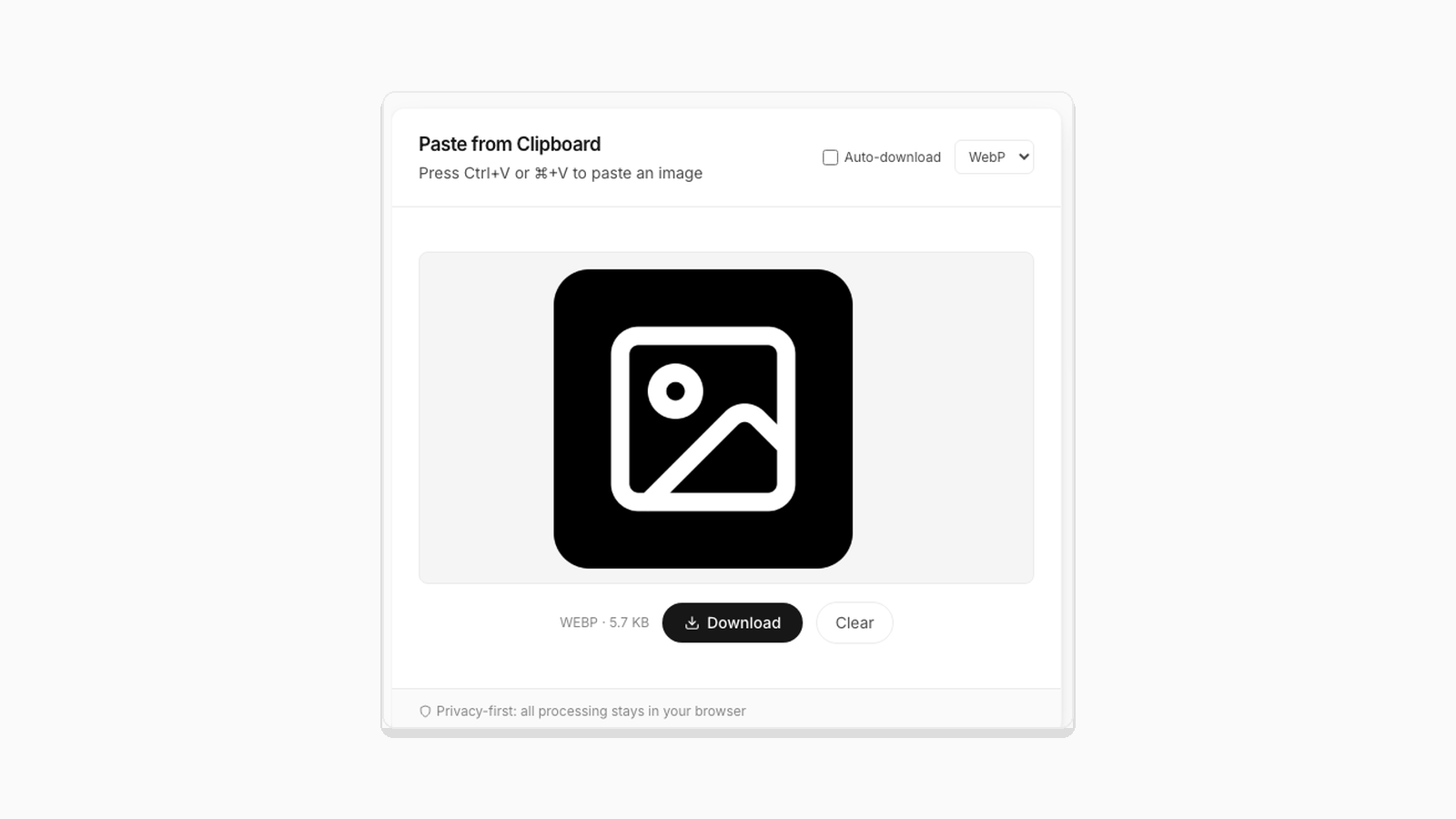
One important limit first: PasteDownloadApp converts format, it does not resize an image's pixel dimensions. If you need a 512×512 icon and your source photo is 4000×3000, this tool will give you a 4000×3000 file in whatever format you choose, not a resized one. What it is genuinely useful for is picking the right format and understanding transparency, which is where most people actually go wrong. Here is what each use case needs, backed by a real conversion of an actual 512×512 app icon.
Favicons and App Icons: Transparency Is the Whole Point
A favicon or app icon almost always needs a transparent background so it sits cleanly on a browser tab or home screen regardless of theme. I ran this site's own 512×512 app icon (22.3 KB PNG with an alpha channel) through the conversion pipeline to see what each format does to it:
| Format | Size | Transparency |
|---|---|---|
| PNG (source) | 22.3 KB | Preserved |
| JPEG | 16.2 KB | Lost, filled with solid white |
| WebP | 5.7 KB | Preserved |
JPEG's smaller size is irrelevant here because it silently destroys the transparent background, replacing it with solid white, which looks broken the moment the icon sits on anything other than a white surface. For a favicon or app icon, the real choice is between PNG (the safest, most universally supported option) and WebP (76% smaller in this test, with transparency intact, though not every icon-generation tool accepts WebP input). If you are working from an SVG source instead of a PNG, the rasterization quirks in converting SVG and ICO files apply here too.
Social Media Posts: JPEG or WebP, Rarely PNG
Social platforms recompress every image you upload regardless of what you send them, so arriving with the smallest reasonable file saves upload time without any visible quality cost. Unless the image needs transparency (a logo overlay, for instance), JPEG or WebP at PasteDownloadApp's default 92% quality is the right choice. Skip PNG for ordinary photos here. As shown in why re-saving a PNG can make the file bigger, re-encoding a photo as PNG through a browser tool typically produces a larger file than the JPEG or WebP alternative, with no quality benefit for content that started as a photograph.
Resumes: PDF Is Usually Right, But if It Must Be an Image
Most applicant tracking systems expect a PDF, not an image, so that is the better target if you have a choice. When a system specifically asks for an image (a headshot upload, for example), PNG is the safer default if the image contains any text or a logo with sharp edges, since JPEG artifacts around text are a genuine reliability risk when a document might be read closely or printed. For a plain photograph with no text, JPEG at high quality keeps the file small without a visible downside.
Quick Reference
| Use case | Best format | Why |
|---|---|---|
| Favicon / app icon | PNG or WebP | Needs transparency; JPEG destroys it |
| Social media photo | JPEG or WebP | Platform recompresses anyway; smaller upload wins |
| Resume image upload | PNG if it has text, JPEG if it's a plain photo | Text needs sharp edges; photos don't |
Frequently Asked Questions
Can this tool resize my image to exact favicon dimensions?
No. It converts format but keeps the original pixel dimensions. If your source image is not already close to the target size, resize it first in an image editor, then convert the format here if needed.
Why does my icon look fine in the browser but broken when I use it elsewhere?
This is almost always a lost-transparency issue from converting to JPEG at some point in the pipeline. Check that every step, including any tool you used before this one, kept the file as PNG or WebP.
Is WebP safe to use for a resume upload?
Only if you know the receiving system accepts it. Many older upload forms and applicant tracking systems only recognize JPEG and PNG, so WebP is a bigger compatibility risk in that specific context than it is for a website.
Related Guides
 PNG vs JPG vs WebP - Which Format Should You Save Your Image As? Learn the differences between PNG, JPG, and WebP, including quality, transparency, and file size.
  Image Compression Quality Settings Explained, With Real File Sizes What a JPEG or WebP quality number actually changes, shown with real before-and-after file sizes.
  SVG and ICO Quirks You Will Hit When Converting Images in a Browser Vector files and multi-resolution icons do not behave like PNG or JPG. Here is what actually happens when you convert them.
 Convert your own icon or photo at pastedownloadapp.com and compare the real output size across formats.